
Die Connacht Distillery, 2015 eröffnet und war damit die erste neue Brennerei in der irischen Grafschaft Mayo seit 150 Jahren, wechselte im September 2024 in den Besitz der Terroirs Distillers (wir berichteten). Das Unternehmen, zu dem auch die schottische Tullibardine Distillery sowie Highland Queen und Muirhead’s Scotch Whisky gehören, setzte für die Connacht Distillery ein komplettes Rebranding um. Und gibt der Brennerei jetzt auch einen neuen Namen. Aus der Connacht Distillery wird die Ballina Distillery, benannt nach dem Ort, in dem sie zu finden ist.
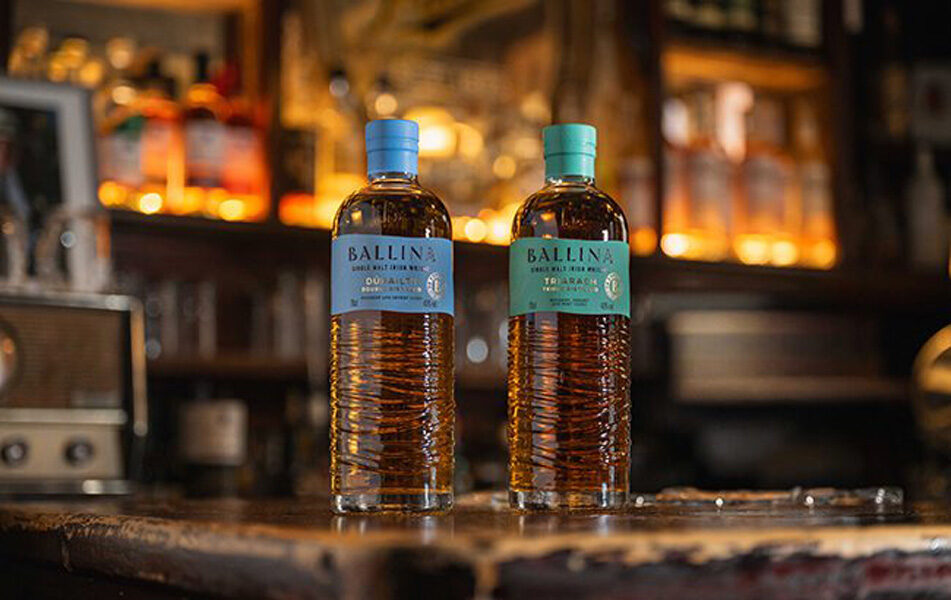
Ebenfalls neu sind die beiden Abfüllungen, deren Erscheinen die Brennerei für den 13. November ankündigt. General manager Mike Elliott:
“We’re delighted to reveal our first two single malts are ready to be enjoyed globally. The small team at the distillery have worked tirelessly over the last year to create a single malt that truly distinguishes itself in the Irish whiskey category in terms of flavour and the craft that goes into it. We hope that shines through in our liquid.”
Die erste Abfüllung, Ballina Dúbailte Double Wood, ist zweifach destilliert. Und reifte in zwei verschiedenen Fassarten: Ex-Bourbon (55 %) und Ex-Oloroso-Sherry (45 %). Abgefüllt wird der Whiskey mit 43 % Vol. und soll 49,90 € kosten.
Blending Manager Stacy Longworth erklärt:
“Slower distillation means prolonged contact with copper in the stills, which adds to the profile of the whiskey. This also gives better control over reflux, which concentrates lighter flavour compounds for a less heavy, more nuanced flavour, contributing a major element to the unique and refined character of our whiskey.”
Die zweite Abfüllung, Ballina Triarach Triple Wood, ist dreifach destilliert. Sie reifte wie Dúbailte auch in einer Kombination aus Bourbon (50 %) und Oloroso-Sherry (40 %), ergänzt durch Ruby Port (10 %). Ballina Triarach Triple Wood kommt ebenfalls mit 43 % Vol. in die Flaschen, und ist für 59,90 € erhältlich.
Blending Manager Stacy Longworth:
“The longer the liquid is allowed to ferment, the more flavour can develop. This creates a sweeter, fruitier, and more complex spirit by increasing the production of desirable flavour compounds (esters) and other congeners, which also impart floral and fragrant notes. I find this approach particularly suits our Triarach expression as it accentuates the stone fruit character the ruby Port casks impart onto the liquid.”